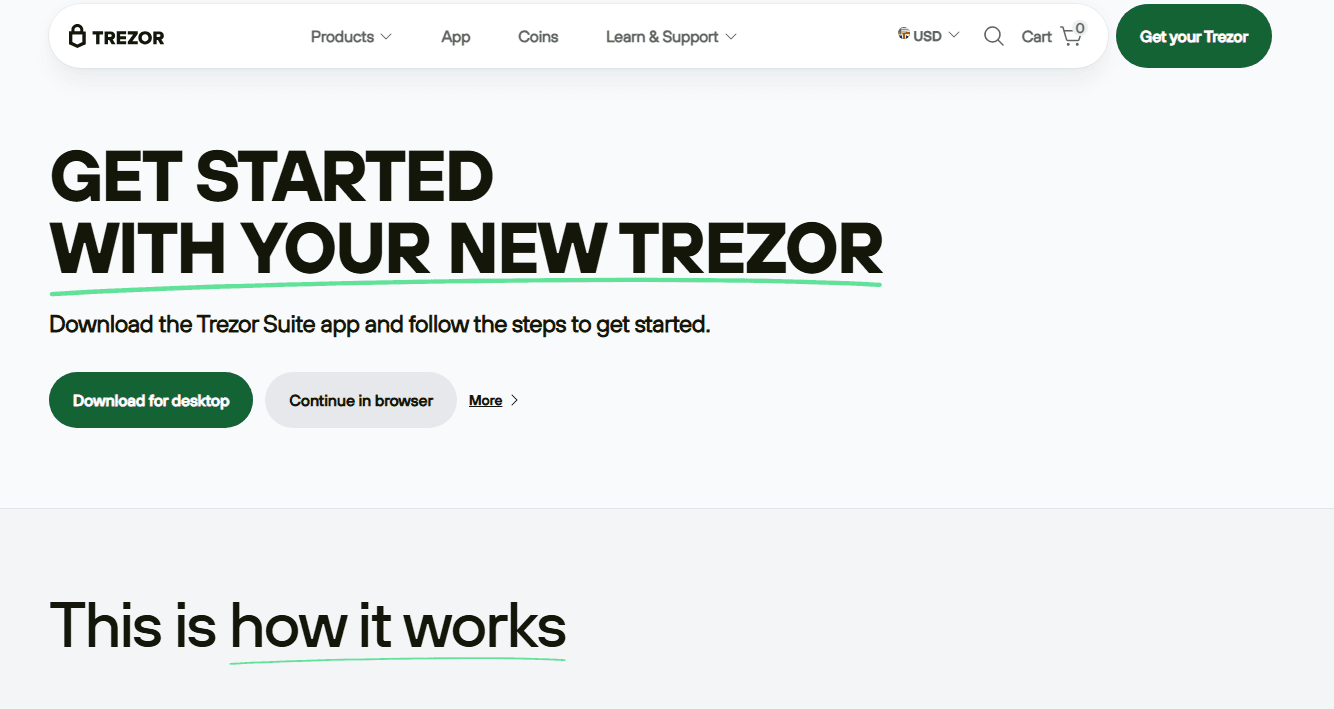
Trezor.io/Start: Complete Guide to Setting Up Your Trezor Hardware Wallet
Trezor.io/start is the official starting point for anyone looking to set up a Trezor hardware wallet and securely manage cryptocurrency. Designed to guide both beginners and experienced users, it provides step-by-step instructions for initializing a device while emphasizing best practices in security and self-custody. By following the guidance provided, users ensure their private keys remain safe and their assets protected from the very beginning.
This guide offers a detailed overview of Trezor.io/start, the steps involved in device setup, and essential information for maintaining long-term security.
What Is Trezor.io/Start?
Trezor.io/start is the official entry point for setting up a Trezor hardware wallet. It ensures that users follow a secure, verified process to initialize their device. The platform is designed to educate users about the core principles of cryptocurrency security, such as self-custody, recovery phrases, and device verification.
The primary purpose is to ensure that private keys are generated securely within the device and that users understand the responsibility of managing their own funds.
Why Proper Setup Is Critical
The initial setup of a hardware wallet establishes the foundation for long-term security. During setup, private keys are generated and linked to a recovery phrase. If this process is not done correctly, users may risk losing access to their funds or exposing their assets to unauthorized access.
Trezor.io/start emphasizes careful attention and deliberate steps to prevent mistakes, ensuring that users are equipped with knowledge as well as technical security.
Understanding Self-Custody
A fundamental concept taught during Trezor.io/start is self-custody. Self-custody means that the user is fully responsible for their cryptocurrency and the private keys that secure it. Unlike online wallets or exchanges, there is no intermediary that can reset access or recover lost funds.
While self-custody provides independence and privacy, it also requires responsibility. Trezor.io/start helps users understand this responsibility and introduces best practices for managing it safely.
Unboxing and Inspecting the Device
Before beginning the setup, users should carefully inspect their Trezor hardware wallet. The device should appear new and untampered. Trezor devices are built with security in mind, and the initialization process is designed to verify the device’s integrity rather than relying solely on packaging.
Users are encouraged to rely on the device screen for all important prompts and information, as it provides the most secure interface.
Initializing the Device
The first step in Trezor.io/start is initializing the hardware wallet. Users can choose between setting up a new device or recovering an existing wallet using a recovery seed. For new devices, the hardware wallet generates private keys internally.
These keys never leave the secure environment of the hardware wallet, ensuring that they are protected from malware or online threats. The internal generation of private keys is a critical security feature.
Creating a PIN Code
During setup, users create a personal identification number (PIN) to secure the device. This PIN is required each time the device is unlocked. Selecting a strong and unique PIN helps protect against unauthorized physical access.
The device also includes mechanisms to prevent repeated PIN guessing attempts, adding an additional layer of protection against theft or unauthorized use.
The Recovery Seed
One of the most important steps in Trezor.io/start is recording the recovery seed. This is a set of words generated by the device that serves as a complete backup of the wallet’s private keys. The recovery seed allows users to restore access if the device is lost, stolen, or damaged.
The recovery seed must be written down carefully and stored securely offline. Anyone who gains access to the recovery seed can control the wallet, so it must never be shared or stored digitally.
Verifying the Recovery Seed
After recording the recovery seed, users are prompted to verify it on the device. This verification ensures that the seed was written down correctly and in the right order.
Skipping or rushing this step can lead to serious problems if a recovery is needed in the future. Trezor.io/start emphasizes the importance of completing this verification carefully.
Installing the Companion Application
After initialization, users are instructed to install the Trezor Suite, the companion application for desktop or mobile. This software serves as the interface for managing cryptocurrency accounts, checking balances, and reviewing transactions.
All sensitive operations, such as signing transactions, are confirmed directly on the hardware wallet. The Trezor Suite does not store private keys, ensuring that security remains hardware-based.
Connecting the Device
Once the application is installed, the hardware wallet is connected to the device, and users unlock it using their PIN. This allows the application to display account information and manage cryptocurrency balances.
All critical actions, including sending cryptocurrency or changing wallet settings, require physical confirmation on the hardware wallet, ensuring that the user remains in control at all times.
Adding Cryptocurrency Accounts
Trezor.io/start guides users through the process of adding cryptocurrency accounts. Each account corresponds to a blockchain and is derived from the private keys stored on the device.
Adding accounts does not expose private keys; it simply enables the software to track balances and transactions for each supported cryptocurrency.
Receiving Cryptocurrency
To receive cryptocurrency, users generate a public address using the companion application. This address can be shared with senders to receive funds. Trezor.io/start instructs users to verify addresses on the device screen to prevent errors or manipulation.
Sending Cryptocurrency
Sending cryptocurrency requires users to review transaction details on the device and approve them physically. The device screen displays the destination address and the amount to be sent, ensuring that users verify all details before approval.
This confirmation process prevents unauthorized transactions and enhances overall security.
Core Security Principles
Trezor.io/start emphasizes fundamental security principles. Users are instructed never to share their recovery seed, never store it digitally, and always verify transaction details on the hardware wallet.
The device screen is considered the ultimate source of truth. Any conflicting information from other sources should be ignored in favor of the device itself.
Avoiding Common Mistakes
Many security problems arise from mistakes made during setup, such as mishandling the recovery seed, skipping verification, or rushing through steps. Trezor.io/start is structured to minimize these risks by guiding users carefully and providing clear instructions.
Maintaining Long-Term Security
Trezor.io/start introduces the importance of ongoing security. Users are encouraged to keep their device firmware and companion software up to date, review security practices regularly, and safely store backups of their recovery seed.
Using the Device Across Platforms
Trezor hardware wallets are compatible with multiple platforms. Users can manage their cryptocurrency on desktops, laptops, or mobile devices while the device itself maintains consistent security protocols. The hardware wallet must always be present and unlocked to authorize sensitive operations.
Benefits of Following Trezor.io/Start
Following Trezor.io/start ensures that users set up their device correctly and understand the reasoning behind each step. This structured approach reduces confusion, minimizes risks, and builds confidence in managing cryptocurrency safely.
Responsibilities and Limitations
While Trezor devices provide strong security, users are ultimately responsible for protecting their recovery seed and device. Trezor.io/start makes these responsibilities clear and prepares users to handle them properly.
Building a Secure Foundation
Trezor.io/start is more than a setup guide; it is a framework for building secure habits and confidence in cryptocurrency management. By completing the setup process carefully, users create a strong foundation for long-term security and self-custody.
Conclusion
Trezor.io/start provides a comprehensive and secure pathway for initializing a Trezor hardware wallet. It teaches users about self-custody, recovery seeds, and hardware-backed security, while guiding them through the steps necessary to begin managing cryptocurrency safely.
Following the instructions carefully ensures that users protect their assets, build confidence, and establish responsible habits for long-term cryptocurrency management.