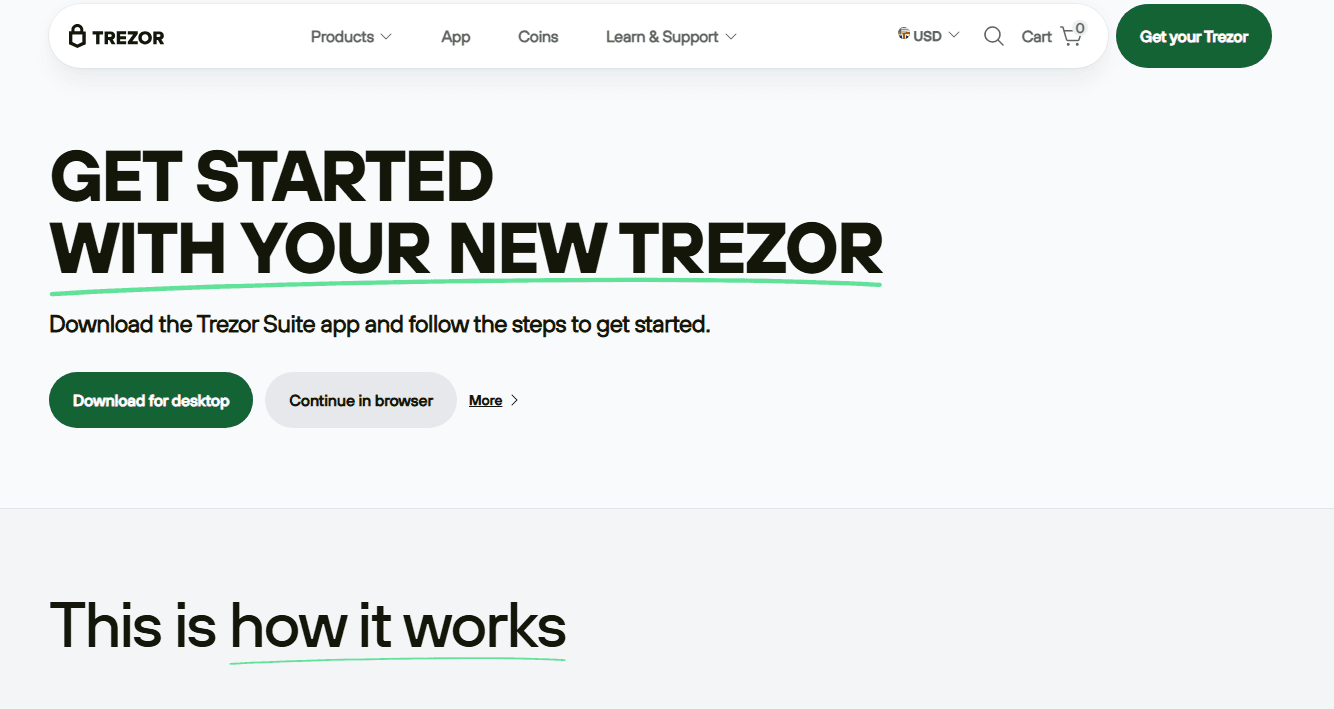
Trezor.io/Start: Complete Guide to Setting Up and Securing Your Trezor Wallet
Trezor.io/start is the official starting point for setting up a Trezor hardware wallet and managing cryptocurrency securely. It provides clear, step-by-step guidance for both beginners and experienced users, ensuring that the setup process is straightforward and secure. By following the instructions provided by Trezor.io/start, users can protect their private keys, maintain control over their assets, and establish long-term security habits.
This comprehensive guide will explain the Trezor setup process, the importance of recovery seeds, device initialization, and the best practices for using a Trezor wallet safely.
What Is Trezor.io/Start?
Trezor.io/start is the official gateway for users who wish to initialize a Trezor hardware wallet. It ensures that the device is set up securely and provides educational resources to help users understand self-custody and cryptocurrency security. The main goal is to guarantee that private keys are generated safely on the device and never exposed to external threats.
Trezor.io/start also emphasizes responsible usage, helping users understand the importance of protecting their recovery seed, verifying transactions, and maintaining device integrity.
Why Proper Setup Is Essential
The setup process of a hardware wallet is critical because it lays the foundation for secure asset management. During this process, private keys are generated, a PIN is established, and a recovery seed is created. If any of these steps are done incorrectly, users could face irreversible loss or exposure of funds.
Trezor.io/start provides a structured approach to prevent mistakes and ensures that users understand each step of the process, fostering confidence and safety from the beginning.
Understanding Self-Custody
Self-custody is one of the core principles emphasized in Trezor.io/start. It means that the user has full control over their cryptocurrency and the keys that secure it. Unlike centralized wallets or exchanges, there is no entity that can reset passwords or recover funds for the user.
While self-custody offers independence and privacy, it also requires responsibility. Trezor.io/start explains the duties of a self-custodian and provides guidance for managing security effectively.
Inspecting Your Trezor Device
Before beginning setup, it is crucial to inspect the Trezor hardware wallet. The device should appear new, free of damage, and untampered. Trezor devices are designed so that security verification occurs during initialization, rather than relying solely on packaging seals.
Users should rely on the device screen for all prompts and instructions, as it is the most secure interface available for device management.
Initializing the Trezor Device
The first step in Trezor.io/start is initializing the device. Users can choose to set up a new wallet or restore an existing wallet using a recovery seed. For new wallets, the device generates private keys internally within a secure environment.
These keys never leave the device, ensuring that they remain protected from malware, viruses, or online attacks. The internal generation of private keys is a critical component of Trezor’s security model.
Setting Up a PIN
During initialization, users are prompted to set up a personal identification number (PIN) for the device. This PIN is required to unlock the hardware wallet and access cryptocurrency accounts. Choosing a strong and unique PIN is essential for protecting the device from unauthorized physical access.
The device also limits the number of incorrect PIN attempts, which protects the wallet in case of theft or loss.
Understanding the Recovery Seed
A recovery seed is a set of words generated by the Trezor device that serves as a complete backup of your wallet. Trezor.io/start emphasizes the importance of writing down the recovery seed accurately and storing it securely offline.
The recovery seed allows users to restore access to their cryptocurrency if the device is lost, stolen, or damaged. Anyone who has access to the recovery seed can control the wallet, so it must never be shared, photographed, or stored digitally.
Verifying the Recovery Seed
After writing down the recovery seed, users are prompted to verify it on the device. This verification ensures that the seed has been recorded correctly and in the proper order.
Skipping this step or entering the seed incorrectly can result in permanent loss of access. Trezor.io/start highlights the importance of completing this verification carefully.
Installing the Trezor Suite
Once the device is initialized, users are instructed to install the Trezor Suite application on their desktop or mobile device. This application provides an interface for managing cryptocurrency accounts, checking balances, and reviewing transactions.
The Trezor Suite does not store private keys. All sensitive operations, such as signing transactions, are authorized directly on the Trezor hardware wallet, ensuring that keys remain secure.
Connecting and Unlocking the Device
After installing the application, the hardware wallet must be connected to the computer or mobile device and unlocked using the PIN. This allows the application to access account information and display balances.
Every important operation, including sending funds or adding accounts, requires physical confirmation on the device, ensuring full control and preventing unauthorized transactions.
Adding Cryptocurrency Accounts
Trezor.io/start guides users through adding cryptocurrency accounts to the device. Each account corresponds to a blockchain and is derived from the private keys stored on the device.
Adding accounts does not expose private keys; it simply allows the Trezor Suite to display balances and manage transactions for supported cryptocurrencies.
Receiving Cryptocurrency
To receive cryptocurrency, users generate a public address via the Trezor Suite application. This address can safely be shared with others to receive funds. Users should always verify the address on the hardware wallet screen to prevent errors or malicious manipulation.
Sending Cryptocurrency
Sending cryptocurrency requires users to review transaction details and confirm them directly on the Trezor device. The screen displays the recipient address and transaction amount, ensuring users can verify the information before approving.
This process prevents unauthorized transactions and reinforces the security benefits of hardware-based wallets.
Security Principles and Best Practices
Trezor.io/start emphasizes several core security principles:
Never share your recovery seed.
Never store the recovery seed digitally or online.
Always verify transaction details on the hardware wallet screen.
Trust the device screen over any computer or mobile prompts.
These principles are reinforced throughout the setup process to ensure users develop safe habits.
Avoiding Common Mistakes
Many common security issues arise from simple mistakes, such as mishandling the recovery seed, skipping verification, or rushing through setup. Trezor.io/start is structured to minimize these risks by providing clear instructions and emphasizing careful, deliberate actions.
Maintaining Long-Term Security
Trezor.io/start encourages ongoing security practices. Users should keep their device firmware and companion software up to date, securely store backups, and regularly review security habits.
Maintaining security over time is critical to ensuring the protection of digital assets against evolving threats.
Using Trezor Across Devices
Trezor hardware wallets are compatible with multiple platforms. Users can manage their cryptocurrency on desktops, laptops, or mobile devices while the device enforces the same security model. The hardware wallet must always be present and unlocked for sensitive actions, ensuring consistent protection.
Benefits of Following Trezor.io/Start
Following Trezor.io/start guarantees that users set up their device correctly and understand why each step is necessary. This structured approach reduces confusion, prevents mistakes, and builds confidence in managing cryptocurrency securely.
Responsibilities and Limitations
Although Trezor devices provide strong security, users are ultimately responsible for safeguarding their recovery seed and device. Trezor.io/start makes these responsibilities clear, helping users prepare for long-term self-custody management.
Building a Strong Security Foundation
Trezor.io/start is more than a setup guide; it teaches users how to manage cryptocurrency safely and independently. Completing the setup carefully establishes a foundation for long-term security and confident asset management.
Conclusion
Trezor.io/start is the essential starting point for anyone using a Trezor hardware wallet. It guides users through secure device initialization, explains key concepts such as self-custody and recovery seeds, and promotes best practices for managing cryptocurrency safely.
By carefully following the instructions and understanding the responsibilities involved, users can ensure that their assets remain secure and that they are prepared for long-term cryptocurrency management.